
Milan Kundera's estimated net worth at the time of his death in July 2023 was in the range of $5 million to $15 million, based on triangulated estimates from publishing industry norms, his long career of international book sales, translation rights, and film adaptation royalties. blank" rel="noopener noreferrer">No audited figure exists, and any source claiming a precise single number should be read with skepticism. He was not a billionaire or even a centimillionaire. He was a critically celebrated novelist whose wealth was consistent with a long, commercially successful literary career in Western Europe, not a celebrity entrepreneur or tech founder.
Milan Kundera Net Worth: Best Estimate and Evidence

Marko Beograd
7 Jun 2026
Who Milan Kundera was and why people search his net worth

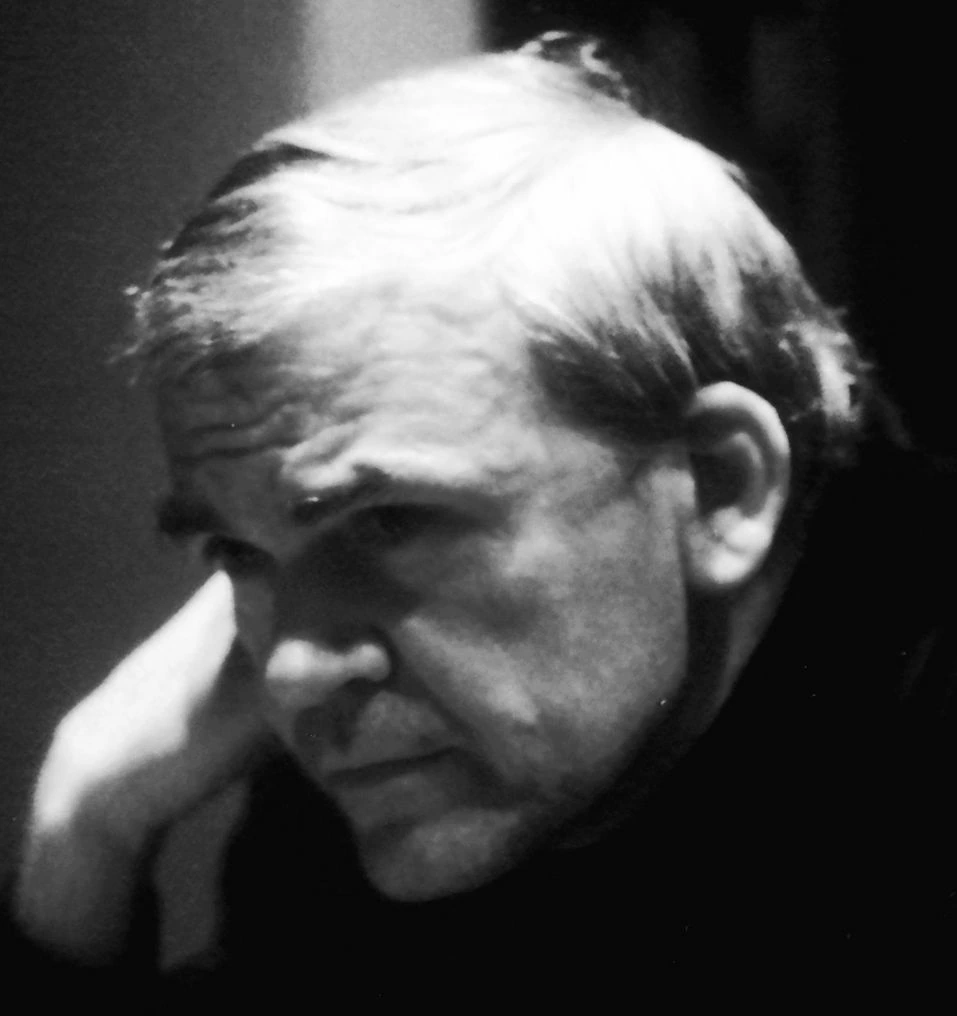
Milan Kundera (April 1, 1929, Brno, Czechoslovakia – July 11, 2023, Paris, France) was one of the most internationally recognized writers of the 20th century. He worked across novels, short stories, plays, essays, and poetry, and his writing is best described as a blend of erotic comedy, political criticism, and philosophical depth. His most famous works include The Unbearable Lightness of Being (1984) and The Book of Laughter and Forgetting (1979), both published in France during his exile.
His books were banned in Czechoslovakia until 1989, which means his entire publishing income for decades came through Western European and American publishers rather than any domestic market. He eventually became both a Czech and French novelist by citizenship and literary identity. He died at age 94 at his Paris apartment, with his passing confirmed by Anna Mrazova, spokeswoman for the Moravian Library in Brno, which holds his archive.
People search his net worth for a few predictable reasons: curiosity after his death, interest in how literary careers translate financially, and the broader question of what elite intellectual figures actually earn. He won the Jerusalem Prize (1985), the Austrian State Prize for European Literature (1987), the Herder Prize (2000), and the Franz Kafka Prize (2020), and his name remains commercially active in bookshops globally. That combination of critical prestige and real commercial reach is what makes the net worth question worth answering carefully.
How net worth is estimated for authors and public intellectuals
Estimating wealth for a literary figure is genuinely harder than estimating it for a CEO or athlete. Authors rarely appear in financial disclosures. They don't file proxy statements or hold publicly traded stock. What researchers and reference databases do instead is triangulate: combine industry-standard royalty rates with known sales volumes, add in verifiable income streams like adaptation rights, apply a conservative multiplier for accumulated assets over a long career, and then acknowledge the remaining uncertainty honestly.
Forbes, for example, openly states in its methodology that it does not pretend to know everything on a private individual's balance sheet and relies on estimated revenue and profit figures tied to observable market inputs rather than direct disclosure. That same logic applies here. For Kundera, there are no public balance sheets, no shareholder filings, and no disclosed property portfolios. What exists is a decades-long body of work with traceable commercial history. That is what responsible estimation is built on.
The core inputs for any Kundera estimate are: royalty income from book sales across dozens of languages, advances from publishers for new works, income from film and stage adaptation rights, and accumulated assets (savings, property, any investments) built over roughly 60 years of professional writing. Each of those inputs carries uncertainty, and that uncertainty compounds. A range of $5 million to $15 million reflects that compound uncertainty honestly without pretending to precision that doesn't exist.
Known income streams: royalties, translations, publishing deals, and adaptations

Kundera's primary income source across his career was almost certainly book royalties. Standard trade royalty rates for literary fiction in the UK and US typically range from 10 to 15 percent of the cover price for hardcovers, with lower rates for paperbacks. For a novel like The Unbearable Lightness of Being, which has sold millions of copies globally across multiple decades, that royalty stream alone would represent a significant cumulative figure, even if the per-copy payment is modest.
Translation rights are a second major income channel. Kundera's work has been translated into dozens of languages, with each translation deal typically involving a separate advance and ongoing royalty participation. His first English translation, The Joke, appeared in London in 1969, which means translation income had been compounding for over 50 years by the time of his death. In Eastern and Central European literary contexts, translation rights are often the dominant revenue source for internationally recognized authors, since the domestic market is comparatively small.
Film adaptations add another layer. The Unbearable Lightness of Being was adapted into a 1988 film, and The Joke was adapted in 1969. Film option and rights agreements for literary properties typically involve upfront option fees and additional payments upon production or release. The exact terms of Kundera's agreements are not publicly disclosed, but these deals are standard for authors of his stature and would have contributed meaningfully to his earnings over the decades.
Speaking engagements and academic affiliations are harder to quantify. Kundera taught at the University of Rennes and later at the École des Hautes Études en Sciences Sociales in Paris. These positions provided salary income during active years, but the amounts are not publicly disclosed and would be modest relative to his publishing income. By the later decades of his life, his public appearances were rare and he was famously private, so speaking fees were unlikely to be a major ongoing income source.
Wealth signals and what can actually be verified
Kundera lived in Paris for most of his adult life following his exile from Czechoslovakia in the 1970s. Paris property ownership, if it existed, would represent one of the most significant potential asset categories, given that Parisian real estate has appreciated substantially over several decades. However, no public records confirm property ownership, size, or valuation. His archive was donated to the Moravian Library in Brno, which is a meaningful biographical detail but tells us little about financial assets.
What can be verified with confidence is the commercial success of his books. The Unbearable Lightness of Being is consistently listed among the best-selling literary novels of the 20th century, which gives a reasonable floor for cumulative royalty income. The existence of major film adaptations is also verifiable. His awards, which are documented across multiple reliable encyclopedic sources, validate his identity and stature, which in turn supports the plausibility of the estimated income range.
What cannot be verified: the size of any savings or investment portfolio, property holdings in France or elsewhere, inheritance considerations, estate planning structures, and any private agreements with publishers that may have included deferred compensation or lump-sum buyouts. These gaps are not unique to Kundera. They are standard limitations for any private individual who never appeared on a wealth list and never disclosed personal finances publicly.
Controversies, timeline context, and misinformation to watch out for

The most important disambiguation to flag: there is a separate entry for a 'Milan Kundera (born 1921)' in some reference databases, including Encyclopedia.com. This is a different person. The novelist and subject of this article was born in 1929 and died in 2023. If you encounter a net-worth page that cites incorrect birth years, different biographical details, or works that don't match The Unbearable Lightness of Being and The Book of Laughter and Forgetting, you are likely looking at either a confused aggregator or an article about a different individual entirely.
Low-quality net-worth aggregator sites sometimes cite a figure like '$10 million' for Kundera with no sourcing or methodology. That number may or may not be in the right ballpark, but because it comes with no evidence chain, it carries no more weight than a guess. Some of these same aggregator networks also link unrelated individuals by accident, mixing up 'Milan' as a first name across entirely different people.
Net Worth Post has a known pattern of mixing unrelated net-worth coverage with pop-culture queries, which creates a misinformation risk through weak attribution or name collisions. The fact that sibling topics on this site include figures like Milan Borjan, Milan Beko, and Milan Popovic illustrates exactly how common this name-collision problem is in reference databases covering Central and Eastern European public figures. Milan Popovic net worth estimates often get mixed up with other people who share the same first name.
Milan Beko net worth estimates often get mixed up with other people named Milan, so it is important to verify identity and sourcing before trusting any figure. This is why people searching for Milan Borjan net worth often run into incorrect name matches. If you meant a different person such as Milan Popovic, it is important to check the same kind of sourcing and methodology before accepting any net-worth number Milan Popovic net worth.
Another timeline issue worth noting: Kundera's financial peak was likely in the late 1980s and 1990s, when The Unbearable Lightness of Being (novel and film) was at its cultural peak. Any estimate being applied to his wealth 'today' in June 2026 is effectively an estate estimate, since he died in July 2023. His estate and intellectual property rights continue to generate royalty income, but that flows to his heirs and estate, not to him directly. A responsible net-worth figure for Kundera should be understood as the estimated wealth he held at the time of his death.
How to check sources and evaluate methodology for updated estimates
Start with biographical verification. Any credible net-worth source for Kundera should correctly identify him as born April 1, 1929 in Brno and deceased July 11, 2023 in Paris. Britannica and Wikipedia both confirm these details and provide verifiable lists of his major works and awards. If a source gets these basics wrong, treat everything else it says about his finances with heavy skepticism.
Then look at methodology transparency. Does the source explain how it arrived at the number? Does it acknowledge that the figure is an estimate? Does it distinguish between income (royalties, advances, fees) and assets (property, savings, investments)? A source that simply states a round number without explaining any of these steps is not doing estimation. It is guessing and presenting the guess as fact.
For ongoing updates, the most useful signals to track are: new publication data from his estate or publisher (HarperCollins and Faber and Faber are among his major English-language publishers), any reported estate proceedings or literary rights transfers, and updates from the Moravian Library in Brno, which manages his archive and may publish relevant information about his literary legacy. Academic databases that track book sales, such as Nielsen BookScan, can also provide indirect evidence of ongoing royalty generation, even post-death.
- Verify biographical basics first: birth date (1929), death date (2023), and key works (The Unbearable Lightness of Being, The Book of Laughter and Forgetting, The Joke)
- Check whether the source explains its methodology or just cites a number
- Confirm the source distinguishes income from assets and acknowledges that private holdings cannot be directly verified
- Cross-reference awards and career milestones against Britannica or Wikipedia to detect identity confusion
- Treat post-death figures as estate estimates, not personal net worth in the conventional sense
Bottom-line estimate and what to take away
The best-available estimate for Milan Kundera's net worth at the time of his death in July 2023 is $5 million to $15 million. The midpoint of roughly $8 million to $10 million is the most defensible single-point estimate if one is needed, but the range is the honest answer. That range reflects decades of royalty income from one of the most internationally translated literary catalogs of the 20th century, income from film and stage adaptations, publisher advances, and accumulated assets in Paris, while acknowledging that none of those asset or income figures are directly disclosed.
| Income/Asset Category | Estimated Contribution | Verifiability |
|---|---|---|
| Book royalties (lifetime, global) | High (multi-million cumulative) | Indirect, via sales data and standard royalty rates |
| Translation rights (50+ languages) | Moderate to High | Partially verifiable through publication records |
| Film adaptation rights (1969, 1988) | Moderate (one-time and ongoing) | Existence confirmed; specific terms not disclosed |
| Academic/teaching salary | Low to Moderate | Not publicly disclosed; modest by industry norms |
| Speaking engagements | Low (later career was private) | Not documented publicly |
| Property and savings (Paris) | Unknown | Not publicly disclosed or verified |
| Estate/intellectual property (post-2023) | Ongoing (flows to estate) | Not separately quantified |
If you are using this figure for reference purposes, the responsible way to present it is: 'Milan Kundera's estimated net worth at the time of his death (July 2023) was approximately $5 million to $15 million, based on industry-standard estimates of royalty income from his internationally published literary catalog, film adaptation rights, and accumulated assets. For a look at similar net-worth speculation for another famous historical figure, see Milan Kováč Tesla net worth. This is an estimate only. No audited financial disclosure exists.' That framing is both accurate and useful, which is what a good reference database entry should deliver.
FAQ
Is Milan Kundera’s net worth a number from Forbes or another outlet, or is it just an estimate range?
It is an estimate range, not an audited disclosure. A credible approach typically models income sources such as royalties, translation advances, and adaptation rights, then applies conservative assumptions for accumulated assets. If a site claims a single precise figure without showing its income and assets framework, treat it as speculation.
Does the $5 million to $15 million figure reflect what his estate is worth after July 2023?
No, it is intended to represent wealth he likely held at the time of his death (July 2023). After death, additional royalties can continue to flow from publishing and screen licensing, but those payments go to heirs or the estate structure rather than to Kundera personally.
Why can a writer’s net worth be lower than readers expect given how famous the books are?
Cultural fame does not automatically mean high personal wealth. Literary fiction usually pays relatively modest per-copy royalties, and exiled publishing restrictions limited the domestic income base for decades. Also, many writers do not own the intellectual property outright, meaning publishers and licensors can capture significant portions of long-term revenue.
Could Milan Kundera have made much more money from film rights than the article suggests?
It’s possible for any individual deal to be unusually favorable, but the article’s range already accounts for typical option fees and production or release payments that come with major adaptations. The key limitation is that contract terms are rarely public, so responsible estimates must stay within a broad band rather than assume an outsized payout.
Do speaking fees, teaching jobs, or prizes substantially change the net worth estimate?
They likely matter less than book-related revenue streams. Teaching salaries and occasional appearances can add income, but the article’s methodology treats them as smaller and less reliably quantifiable compared to royalties, translation rights, and adaptation payments over a long career.
How can I tell if a net-worth page is mixing up Milan Kundera with a different person named Milan?
Check identity basics first: correct birth date (April 1, 1929), death date (July 11, 2023), and matching works like The Unbearable Lightness of Being. Also verify that the page doesn’t cite unrelated biographies, different birth years, or incorrect bibliographies, which are common signs of name-collision errors across aggregator databases.
What’s the difference between net worth and annual earnings for Kundera’s case?
Net worth is the value of accumulated assets at a point in time, while annual earnings reflect a single year’s income from royalties, advances, and licensing. Kundera’s royalties could continue after publication peaks, so an “annual income” claim might look high even if the net worth estimate remains conservative.
If Kundera’s books sell continuously, shouldn’t his net worth rise beyond the death-time range?
Sales after death do not directly increase Kundera’s net worth because he cannot benefit personally. New sales can increase the estate’s or heirs’ incoming royalties, which is different from the amount Kundera personally had when he died.
What evidence would most likely update or refine the estimate over time?
New, verifiable details about estate proceedings, reported transfers of literary rights, or confirmed archival and rights-management disclosures can improve accuracy. Indirect signals like updated sales datasets and documented licensing activity can also refine assumptions about how much royalty and adaptation revenue continues to be generated.
Is it reasonable to use a single midpoint value for practical purposes?
Yes, with caution. The article suggests a midpoint around $8 million to $10 million as a defensible single-point estimate, but it should still be presented as approximate because the largest uncertainty remains undisclosed assets and the exact contract terms for translations and screen adaptations.