
The most credible estimates place Miodrag Kostić's net worth in the range of approximately €2.7 to €2.8 billion, based on regional wealth rankings published by outlets including Nedeljnik, Magyar Szó, Serbian Monitor, and Q Wealth Report. That figure reflects his controlling stake in MK Group, a Serbian conglomerate spanning agriculture, tourism, green energy, and banking, and it is broadly consistent across the more substantive regional sources. blank" rel="noopener noreferrer">Figures you may encounter elsewhere, ranging from $540 million to as low as $3.87 million, are either outdated, methodologically opaque, or simply wrong. Kostić passed away on 13 November 2024, which means any live-updating celebrity net worth tool publishing figures for 2025 or 2026 should be treated with extra skepticism.
Miodrag Kostic Net Worth: How to Verify Estimates Reliably

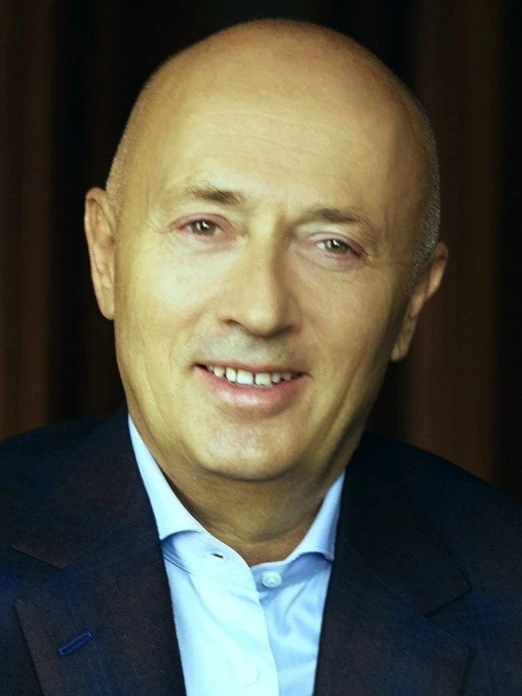
Who Miodrag Kostić was and why people search his wealth

Miodrag Kostić (Serbian Cyrillic: Миодраг Костић) was born on 25 August 1959 and died on 13 November 2024. He was a Serbian businessman best known as the founder of MK Group, which he established in 1983 and grew into one of the largest privately held conglomerates in the Western Balkans.
MK Group’s official profile also describes Miodrag Kostić as the founder of MK Group (started in 1983) and the leader behind its expansion across agriculture, tourism, green energy, and banking founder of MK Group, which he established in 1983 and grew into one of the largest privately held conglomerates. By the time of his death, MK Group encompassed over 40 companies and employed more than 7,000 people in Serbia alone.
His portfolio stretched from agricultural processing and food production (the 2011 Carnex acquisition being a landmark deal) to hotel tourism, green energy, and banking through M&V Investments, a brokerage house he founded in 1995.
His name regularly appeared on regional rich lists, and Forbes had at various points referenced him among the wealthiest individuals in the Balkans. That combination of business scale, regional media coverage, and occasional Forbes citations is exactly why people type his name into search engines wanting a reliable number. It is also worth flagging the disambiguation issue directly: there are other public figures in the region with similar names, including athletes and politicians. The Miodrag Kostić tied to MK Group is the correct subject here, and his identity is well-documented across Wikipedia, MK Group's own management profiles, and verified company filings.
What 'net worth' actually means for a figure like Kostić
Net worth, as used in public wealth estimates, means total estimated assets minus known or estimated liabilities. For a business founder like Kostić, the dominant asset is typically equity ownership in his companies, which means the headline number is sensitive to how those companies are valued. Private companies, unlike publicly traded ones, do not have a real-time market price for their shares. Valuers must use proxies: comparable public company multiples, reported revenues, disclosed transaction prices, or book values from regulatory filings. MK Group is privately held, so there is no daily stock price to anchor the estimate. This is why different sources produce different numbers, and why even well-researched estimates come with meaningful uncertainty.
A second source of variation is what gets included. Some estimates count only the controlling shareholder's personal stake. Others aggregate the gross value of all assets a group controls, without netting out debt. Still others rely on older valuations that have not been refreshed after acquisitions, disposals, or market movements. None of this is unique to Kostić. It applies to any private-sector billionaire in Eastern Europe, including names that come up in the same regional rankings. Understanding this upfront saves a lot of confusion when you see numbers that appear wildly inconsistent.
The reported figures and what range is most defensible

Here is a side-by-side look at the figures that circulate most widely, along with what each source appears to be measuring and how credible it is.
| Source | Figure Reported | Currency / Year | Notes |
|---|---|---|---|
| Nedeljnik (regional wealth ranking) | 2,723,012,075 | EUR (regional ranking year) | Consistent with other regional rankings; methodology based on company valuations |
| Magyar Szó (Hungarian-language regional list) | 2,723,012,075 | EUR | Matches Nedeljnik; cross-regional sourcing adds corroboration |
| Q Wealth Report (Serbia's wealthiest) | 2.78 billion | EUR (2023 estimate) | Explicit wealth-ranking methodology; upper end of consistent cluster |
| Serbian Monitor (wealth narrative) | 2.78 billion | EUR | Cites MK Group revenue of ~300M EUR/year as supporting data |
| Sarajevo Times (regional analysis) | 540 million | USD | Appears to use an older or partial valuation; significantly lower |
| IPFS mirror page (older content) | 520 million | EUR (cited as 2014) | Clearly outdated; mirrors stale content from 2014 era |
| People Ai (automated estimate) | 3.87 million | USD (2026 update) | Explicitly disclaimed as estimated from social factors; almost certainly incorrect |
The cluster of figures around €2.7 to €2.78 billion is the most defensible range. Multiple independent regional sources arrive at nearly identical numbers, the figure is consistent with MK Group's reported revenues and known acquisition history, and it aligns with Forbes' historical regional rankings. The $540 million figure from Sarajevo Times is plausible as a historical snapshot from an earlier period in MK Group's growth, but it is not current. The $3.87 million figure from People Ai should be disregarded entirely.
How reliable are different types of sources
Not all sources that publish a net worth figure have put equal work into arriving at it. Here is a practical breakdown of the source types you will encounter and what weight to give each.
- Official financial disclosures and regulatory filings: The most reliable input. In Kostić's case, the pressetext beneficial ownership notification that identifies him as the beneficial owner of BDD M&V INVESTMENTS AD BEOGRAD and INFENITY is a primary document. These filings are legally binding and traceable. They do not give you a net worth directly, but they confirm ownership structures that underpin any credible estimate.
- Credible regional business media (Nedeljnik, Serbian Monitor, Magyar Szó): These publications produce annual or periodic wealth rankings drawing on publicly reported company revenues, known transaction values, and cross-referenced ownership data. They are not audited, but they apply consistent methodology and are accountable to their readership. The convergence of their figures around €2.7 billion is meaningful.
- International outlets with regional expertise (Forbes regional editions, Q Wealth Report): Useful for triangulation. Forbes' inclusion of Kostić on regional lists is corroborated by primary reporting, not just aggregation. Their figures carry more methodological weight than celebrity-style sites.
- Celebrity net worth aggregators and automated tools (People Ai, celebrity gossip directories): These almost always disclaim that their estimates are based on publicly available information and social factors. People Ai's own disclaimer states the figure may not be accurate. For a figure like Kostić, whose wealth was tied to private company valuations rather than public salaries, these tools are essentially guessing.
- Outdated mirrors and static archived pages: Pages citing 2014-era figures or mirrored IPFS content do not update. They are historical artifacts, not current estimates. Always check when the underlying data was gathered, not just when the page was last indexed.
Where Kostić's wealth actually came from

Understanding the wealth drivers behind the estimate makes the €2.7 billion range much easier to evaluate. Kostić's fortune was built almost entirely through MK Group and its subsidiaries, rather than through employment income or liquid financial assets in the conventional sense.
MK Group's core businesses
MK Group spans agriculture, food processing, tourism, real estate, green energy, and banking. Agriculture and food processing are the historical backbone: the group's acquisition of Carnex in 2011 added one of Serbia's largest meat processors. The purchase of bankrupt PIK Bečej for €45.5 million at a public auction added significant agricultural land and processing capacity. Serbian Monitor's reference to MK Group earning approximately €300 million in revenue in a single year is consistent with the scale of these operations. Revenue at that level, for a privately held conglomerate with controlled cost structures and vertical integration, supports a multi-billion-euro enterprise valuation using standard industry multiples.
Tourism and real estate holdings

MK Group's hotel and tourism portfolio includes a 33.55% stake in specific hotel group ownership structures in the region. Kostić also held majority ownership of Aerodrom Portorož, a regional airport in Slovenia, which represents an asset class not typically associated with Serbian conglomerates and adds geographic diversification to the wealth base.
Financial services and investment vehicles
blank" rel="noopener noreferrer">M&V Investments, founded in 1995, is the brokerage and investment arm tied directly to Kostić's name in regulatory filings. The pressetext beneficial ownership documentation identifies him as the beneficial owner of both BDD M&V INVESTMENTS AD BEOGRAD and INFENITY, confirming that the financial services side of the group was structured directly under his personal control, not held through intermediate entities that could dilute attributable wealth.
Green energy and expansion
MK Group's move into green energy represents a more recent layer of value added to the group's asset base. While precise valuation data for this segment is not publicly disclosed, its inclusion in the group's official description of strategic priorities indicates it was a meaningful part of the late-stage growth story.
How to triangulate an estimate yourself

If you want to go beyond taking a single published figure at face value, here is the method that produces the most defensible range for a private-sector figure like Kostić.
- Confirm identity first. Make sure the source you are reading is discussing Miodrag Kostić of MK Group (born 1959, died November 2024), not another individual with a similar name. Check for references to MK Group, M&V Investments, and Serbian business context.
- Find reported revenues. Serbian Monitor cites MK Group revenues of approximately €300 million annually. Independent business media or Serbian business registry filings (Agencija za privredne registre, the Serbian Business Registers Agency) can corroborate or refine this figure.
- Apply a revenue multiple. Private food, agriculture, and conglomerate businesses in Central and Eastern Europe typically trade at enterprise value multiples of 0.8x to 1.5x revenue, depending on profitability and sector. At €300 million revenue, that implies an enterprise value of roughly €240 million to €450 million for that segment alone. The full group spans multiple higher-margin sectors (banking, tourism, energy), which lifts the aggregate multiple.
- Layer in known asset transactions. The PIK Bečej acquisition at €45.5 million, the Carnex deal, and the Aerodrom Portorož stake are documented transactions. Each adds a floor value to the asset base that is not dependent on revenue multiples.
- Cross-reference regional rankings. Check whether Nedeljnik, Q Wealth Report, or similar regional publications have run wealth rankings in the period you are researching. If multiple independent outlets converge on a similar figure using different inputs, that convergence is meaningful.
- Account for ownership share. Kostić was the controlling founder of MK Group. Beneficial ownership documentation confirms direct control over key shareholder entities. Unlike a minority investor, the full enterprise value is primarily attributable to his position.
- Apply a discount for private company illiquidity. Private stakes are conventionally discounted 20 to 30 percent versus equivalent publicly traded equity because they cannot be sold at a moment's notice. Even after that discount, the €2.7 billion figure survives at approximately €1.9 to €2.1 billion on a conservative liquidity-adjusted basis, which is still far above the outlier figures circulating online.
Where to find updates and how to spot bad information
Because Kostić died in November 2024, the wealth question now involves estate and succession dynamics as much as personal net worth. If you are specifically trying to estimate Tomo Milicevic net worth, use the same approach of cross-checking primary business filings and credible regional wealth lists. Any post-2024 reporting should address what has happened to MK Group's ownership structure, whether assets have been transferred, and how the group is being managed. Sources that continue to report Kostić's personal net worth as a live, updating figure without acknowledging his death are not tracking the situation accurately.
For the most current and reliable data, these are the sources worth bookmarking. The Serbian Business Registers Agency (APR) publishes annual financial statements for Serbian companies, including MK Group subsidiaries. These are not always easy to parse but they contain audited revenue and asset figures. Regional outlets like Nedeljnik and NIN periodically update their rich lists. The Addiko Bank regulatory filing archive, where the pressetext beneficial ownership document was filed, is a good example of where primary ownership evidence surfaces. For historical context on how his wealth was reported over time, cross-referencing Forbes regional editions against the regional press gives the clearest timeline.
Red flags that indicate a source is unreliable: a net worth figure below €500 million for the post-2015 period (MK Group was already well past that scale by then); a figure expressed in millions rather than billions with no explanation of methodology; a site that lists dozens of celebrities with precise dollar figures but no disclosed data sources; any tool that claims to update Kostić's net worth monthly in 2025 or 2026 without referencing estate proceedings or succession. People Ai's $3.87 million figure is a textbook example of an automated tool producing a nonsensical output that bears no relationship to documented business reality.
For context within the broader Balkan business landscape, Kostić's wealth profile is comparable in structure, though not necessarily in scale, to other prominent regional figures covered in similar wealth research. Names like Miroslav Mišković are frequently listed alongside Kostić in the same regional rankings, and researchers interested in Serbian and regional wealth often find it useful to track these figures as a group rather than in isolation. The same triangulation methodology described above applies to any private-sector figure from the region.
The bottom line on Miodrag Kostić's net worth
The most credible estimate for Miodrag Kostić's net worth, based on converging regional wealth rankings and consistent with the documented scale of MK Group's operations, is approximately €2. 7 to €2. 78 billion. This figure comes from multiple independent regional sources and is grounded in known revenue data, documented acquisitions, and confirmed ownership structures.
Q Wealth Report is one of the wealth-research sources estimating Kostić’s fortune at about €2. 78 billion when compiling Serbia’s top wealthy individuals for 2023. Figures below €500 million are outdated, and figures in the single-digit millions are automated errors.
Post-November 2024, any updated estimate needs to account for the transition of his estate and MK Group's succession structure, making this an area where the picture may shift as new disclosures emerge. If you are comparing numbers online, it helps to focus on how miko tomasevich net worth estimates handle ownership, valuation methods, and sources.
If you are specifically looking for Neven Tomic's net worth, this article's framework can help you judge whether the number you see is based on credible ownership and valuation evidence Neven Tomic net worth.
FAQ
If I see a new “2025 net worth” number for Miodrag Kostić, how can I tell quickly whether it’s credible?
Check whether the source mentions his death (13 November 2024) and addresses succession or estate effects, then see if it references primary evidence such as company filings or documented beneficial ownership. If it does not, treat the figure as an automated or outdated estimate.
Why do some sites show a net worth in millions or single digit millions for Kostić, even though MK Group is much larger?
Those numbers usually come from missing or incorrect asset attribution, using the wrong person with a similar name, or relying on an untraceable guess for private company value. For Kostić, a meaningful estimate should align with a multi-billion enterprise scale for MK Group or a controlling stake valuation.
When estimating net worth for a private conglomerate founder, should I focus on total group assets or only the controlling shareholder’s stake?
For “net worth” comparisons, controlling-stake valuation is usually closer to what wealth rankings intend. Sources that aggregate whole-group assets without consistent debt netting can create inflated or inconsistent results, so compare methodology rather than just the headline number.
How much can valuation assumptions swing Kostić’s net worth, given MK Group is privately held?
A lot. The biggest swing comes from how valuers approximate private company equity value (multiples on revenue, book value, or transaction references) and whether they use updated financials after acquisitions and disposals. Even two credible methods can land in different ranges if they use different equity valuation anchors.
What is the practical way to cross-check a published number against MK Group’s filings?
Start with audited annual statements for relevant Serbian subsidiaries in the APR database, then look for total assets and equity figures and see whether the timing matches the wealth estimate. If the published net worth relies on older data, it can look correct historically but drift from reality.
Does MK Group’s involvement in multiple sectors (agriculture, tourism, green energy, banking) make net worth estimation harder?
Yes, because different segments require different valuation approaches and may have different levels of transparency. For example, banking and brokerage-related entities can be valued differently than operating businesses like meat processing or hospitality, so a single simplistic model can misstate the overall equity value.
How should I interpret estimates that say they are “gross” versus “net” wealth?
“Gross” figures often reflect total assets under control or total enterprise value without consistently subtracting debt or minority interests. “Net” figures should reflect total estimated assets minus liabilities. If a source does not specify whether it netted out debt and how it handled ownership percentages, adjust your trust level.
Could Kostić’s death change the way net worth should be reported?
Yes. After death, some numbers effectively become an estate valuation question, not a “current personal net worth” question. A reputable update should discuss ownership transfer or succession structure, and whether shares were redistributed among heirs or entities.
Is there a reliable way to avoid the name-confusion problem when searching for “Miodrag Kostić net worth”?
Use contextual filters before trusting any figure: MK Group as the business link, the Serbian businessman identity, and dates that align with his biography. If the person behind the number cannot be tied to MK Group ownership and filings, the result may be for a different public figure with a similar name.
If I want to compare Kostić’s wealth to other Balkan business rankings, what consistency checks should I apply?
Compare the inclusion rules (controlling stake only versus whole group), the valuation method style (reported assets or multiples-based estimates), and the date reference. Also check whether sources update for major ownership events, so the ranking is apples-to-apples rather than a mix of snapshots and outdated calculations.