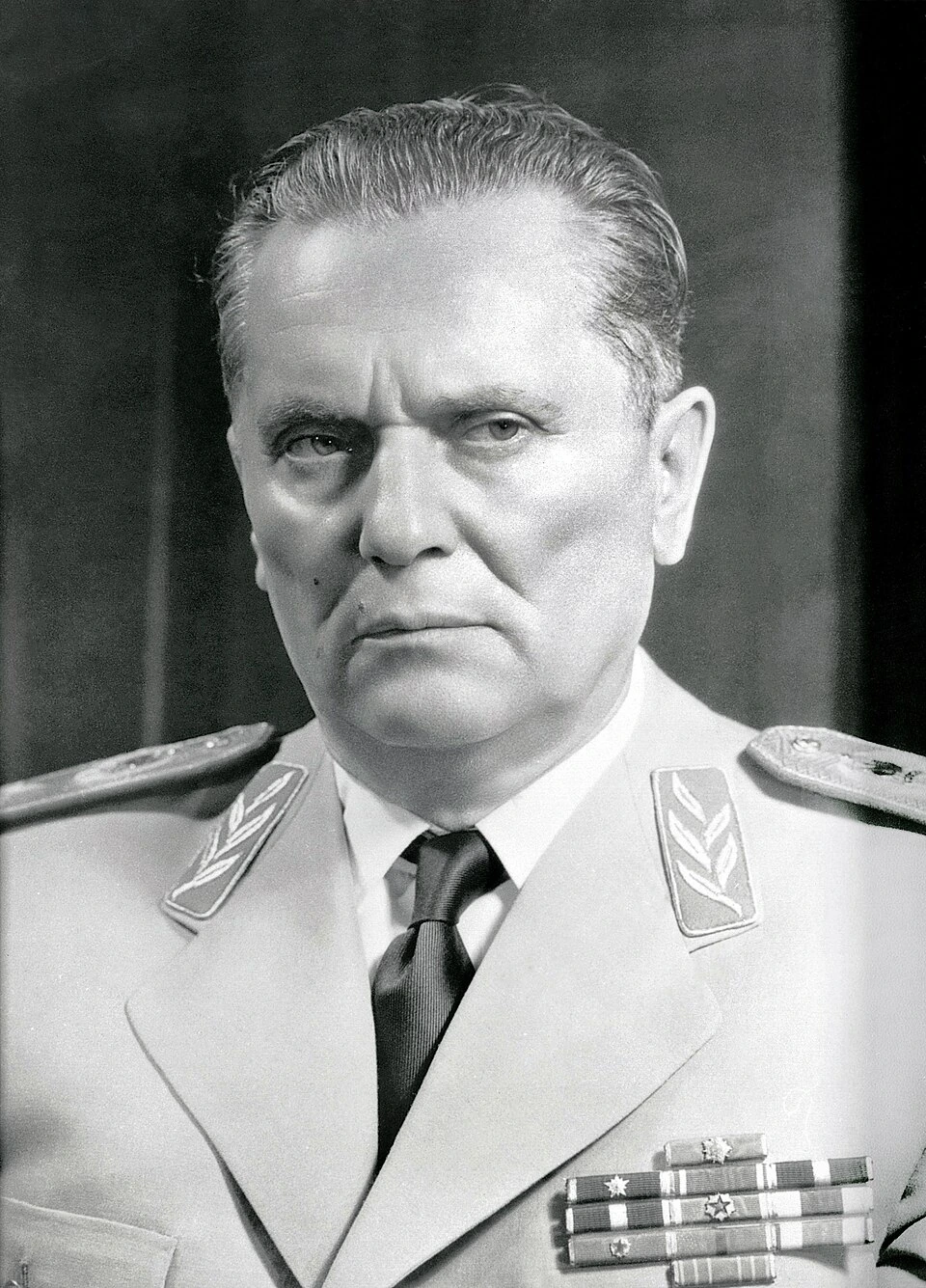
Quick answer: what is Tito's estimated net worth?
The most defensible estimated range for Josip Broz Tito's net worth is somewhere between a few hundred thousand dollars and a few million dollars in clearly documented personal assets, with no verified evidence supporting the multi-billion-dollar figures that occasionally circulate online. The most commonly cited aggregator figures range from $1.1 million to $1 billion, but that spread alone tells you something important: these numbers are not converging on a shared, evidence-based estimate. They reflect very different assumptions, methodologies, and source quality. If you need a practical working figure for research purposes, treat the low end (roughly $1 million to $5 million in personal assets, adjusted for era) as the more defensible starting point, while treating any billion-dollar claim with heavy skepticism unless the claimant can point to verified bank records or property titles.

Tito died in May 1980 after ruling socialist Yugoslavia for over three decades. He did not leave a will, and the records that would typically anchor a net-worth estimate, such as personal financial disclosures, bank statements, property titles held in his name, and audited asset inventories, were either never compiled in a publicly accessible form or remain embedded in state archives that are not fully open to researchers. Yugoslavia's socialist framework did not encourage or require leaders to publicly disclose personal wealth the way democratically elected officials in Western countries typically do. That opacity is not the same as hidden wealth; it is simply an absence of the paper trail that makes modern net-worth estimation reliable.
The inheritance proceedings that followed his death dragged on for years and became tangled in court disputes between his heirs, his widow Jovanka, and the post-Yugoslav successor states. Even the courts struggled to draw a clean line between what Tito personally owned versus what the state had provided for his use as head of state. That legal ambiguity is itself a data point: if trained lawyers and judges in succession proceedings could not definitively catalog his personal estate, any single-number estimate produced by a web aggregator without access to those proceedings should be treated with caution.
Personal wealth vs state entitlements: a critical distinction
This is the most practically important concept to grasp before accepting any net-worth figure for Tito. In socialist Yugoslavia, the concept of social or state property meant that most high-value assets associated with political leadership, including residences, cars, staff, and estates, were owned by the state and provided to officials for use, not given to them as personal property. blank" rel="noopener noreferrer">Tito's famously lavish residences, his private island of Brijuni, and numerous villas around Yugoslavia were not his to bequeath. blank" rel="noopener noreferrer">Courts later confirmed this: inheritance proceedings established that his main residences were classified as state-owned and could not be distributed to heirs as private property.
His widow Jovanka's situation illustrates the point plainly. After Tito's death, she was moved into a government-owned house and permitted to take only limited personal belongings. Reporting at the time described Tito as someone who "did not own much" in the conventional, titleholder sense. That does not mean he lived modestly, he clearly did not, but "living well on the state's dime" is fundamentally different from "personal net worth." Any estimate that conflates state-provided entitlements with personal assets will dramatically overstate what Tito actually owned.

For living public figures with financial disclosure requirements, such as U.S. legislators, net-worth methodology starts with filed disclosures and works outward: list disclosed assets, apply valuation to mid-points of reported ranges, subtract known liabilities, and flag items where the range is wide or the valuation is uncertain. Organizations like NOTUS that have published their methodology for calculating lawmakers' wealth are transparent about this process. For Tito, none of those inputs exist in a publicly accessible, verifiable form.
For historical figures without formal disclosures, researchers typically rely on a combination of property records, court documents, estate inventories, currency and asset values at the time of death, and any surviving financial records from banks or government archives. In Tito's case, the available public record consists mainly of court documents from inheritance proceedings (which confirmed the state-owned nature of most properties), journalistic accounts, and the absence of any publicly filed personal asset inventory. That limits any estimate to a rough proxy at best.
From a pure methodology standpoint, net worth is total assets minus total liabilities. For Tito, the assets side is poorly documented for privately held items, and the liabilities side is almost entirely unknown. What remains are indirect signals: the legal proceedings, accounts of what his heirs could and could not claim, and the general conditions under which senior Yugoslav officials held personal property.
The billion-dollar claims and the secret Swiss accounts story
The most dramatic figures associated with Tito's wealth involve allegations of secret foreign bank accounts, most commonly a Swiss bank account speculation figure of approximately $2.5 billion. This claim has circulated in Balkan political discourse for decades. It is worth understanding it clearly: Serbian officials who investigated the matter publicly stated there was no evidence of such accounts. Balkan Insight reporting from 2009 to 2013 frames the issue not as confirmed wealth but as a political and legal dispute about whether former Yugoslav state assets might be held somewhere that successor states could theoretically claim. No bank records, account numbers, or confirmed deposits have been made public.
The conceptual problem with the secret-accounts claim is also worth noting. If such funds existed, they would logically be categorized as either personal wealth (Tito stole state money) or state money (Yugoslavia deposited funds abroad through official channels). Neither framing has been confirmed with documentation. The reporting also notes that it would be difficult to cleanly classify such deposits as "state money" for the purposes of successor-state claims, precisely because no institutional paper trail has surfaced. In the absence of verifiable records, the $2.5 billion figure functions as a rumor, not an estimate.
The aggregator sites that list Tito's net worth at $1 billion are almost certainly drawing on some version of this speculation without flagging its unverified status. That is a significant methodological failure. A number derived from an unconfirmed rumor is not an estimate; it is a guess dressed up as one.

| Source type | Figure cited | Methodology disclosed? | Primary records cited? | Credibility rating |
|---|
| Web aggregator (e.g., networthlist.org) | $1.1 million | No | No | Low |
| Web aggregator (e.g., global leaders roundups) | $1 billion | No | No | Very low |
| Swiss bank account speculation (political claims) | $2.5 billion | No | No | Unverified rumor |
| Court/inheritance proceedings (Balkan Insight, Vreme) | No personal figure given; residences confirmed state-owned | Yes (legal process) | Yes (court documents) | Highest available |
| Journalistic accounts (IPS, Balkan Insight) | Describes limited personal belongings; no private title confirmed | Partial | Partial | Moderate |
The pattern here is consistent with what you see across many historical Balkan and Eastern European public figures: the more specific and dramatic the number, the less likely it is to rest on verified primary records. The most credible sources are the ones that decline to assign a clean dollar figure precisely because the evidentiary record does not support one.
How to verify any net-worth claim you find
Whether you are checking a figure for Tito or for any other historical public figure from the Balkans or Eastern Europe, the same verification checklist applies. Run through these questions before accepting a number:
- Does the source identify what specific assets are included in the estimate? Look for property titles, bank records, court inventories, or disclosed asset lists. If none are cited, the figure is unsourced.
- Does the source distinguish between personally owned assets and state-provided entitlements? For any socialist-era official, this distinction is essential.
- Is the figure consistent across multiple independent sources, or does it vary wildly? Genuine convergence across credible, independent sources is a positive signal. Wild variation (like $1.1 million vs $1 billion) signals that no one is working from the same evidence.
- Does the source explain its currency conversion methodology? For a figure from the 1970s or 1980s, the conversion basis (CPI, exchange rate, purchasing-power parity) matters enormously and should be stated.
- Can you trace the original claim? Many aggregator sites copy figures from each other without citing a primary source. If you follow the citation chain and it leads nowhere, the number has no verified origin.
- Does the source acknowledge uncertainty? Any credible net-worth estimate for a historical figure should include a range and explicit caveats, not a single clean number presented as fact.
Currency and time conversion: putting historical figures in context
Even if you had a reliable figure for Tito's personal assets at the time of his death in 1980, converting that number to 2026 dollars requires care. The most common approach is CPI-based inflation adjustment: take the 1980 nominal value and multiply by the ratio of today's CPI to the 1980 CPI. By that measure, $1 million in 1980 U.S. dollars is roughly equivalent to $3.7 to $4 million in 2026 dollars, depending on the specific index and methodology used.
But CPI adjustment is only one option, and it is not always the most meaningful one. Economic historians also use wage-based comparisons (what would this sum represent relative to average wages?) or GDP per capita comparisons (what fraction of a country's annual economic output does this represent?). Each method produces a different result, and each answers a slightly different question. When you see a historical net-worth figure without any stated conversion methodology, you have no way to know which basis the author used, or whether they adjusted at all.
For Tito specifically, there is an additional complication: his personal finances were denominated in Yugoslav dinars, a currency that underwent multiple redenominations and was subject to significant inflation during Yugoslavia's economic difficulties in the 1970s and 1980s. Any conversion to U.S. dollars also requires choosing an exchange rate or purchasing-power parity basis for the relevant year, and those figures are not always easy to source reliably for a non-convertible socialist currency. This is one reason why even well-intentioned estimates carry substantial uncertainty.
What a responsible estimate looks like
Given everything above, here is how to frame Tito's net worth honestly. For a related example of how net-worth claims are handled online, see vasilije micic net worth and how it compares with evidence-based estimates Tito's net worth. His personally owned and legally titled assets at the time of his death appear to have been modest relative to the scale of the state machinery surrounding him. If you are also researching Tomislav Mihaljevic net worth, the same standard applies: prioritize verifiable primary records over sweeping aggregator claims Tito's personally owned and legally titled assets. For the topic of Tomislav Uzelac net worth, use the same approach: prioritize verifiable primary records and treat aggregator numbers as unconfirmed until methodology and documentation are provided Tomislav Mihaljevic net worth. If you are comparing claims, be cautious because many web pages recycle rumor-based numbers instead of primary evidence for Bogdan Ilic net worth. A Dragoslav Ilic net worth claim should be treated the same way: look for verifiable primary records and clear methodology rather than sweeping aggregator numbers Tomislav Mihaljevic net worth. Court proceedings confirmed that major properties were state-owned. His widow was left in materially constrained circumstances. No verified private bank accounts, investment portfolios, or property titles in his personal name have been documented in public records. The low-end aggregator figure of approximately $1.1 million may be attempting to capture something in this range, though without methodology it is impossible to confirm. Adjusted for inflation to 2026, that would be roughly $4 to $5 million in purchasing power, which is a plausible order of magnitude for a head of state's personal effects and savings, though still speculative without primary records.
The billion-dollar figures should be set aside unless and until someone produces verifiable account records. That standard should apply to any historical figure in this region, whether you are researching a politician, business leader, or cultural figure from the same era. The methodology that makes a net-worth figure useful is the same whether the subject is Tito or anyone else: traceable inputs, clearly stated assumptions, acknowledged uncertainty, and a range rather than a false point estimate.
Practical next steps if you're researching this topic

- Start with Balkan Insight's reporting on Tito's real estate legacy and the inheritance court proceedings: these are the closest thing to primary-record journalism available in English on this question.
- Search for the Vreme reporting on the inheritance dispute, which addresses the legal question of social property versus personal property directly.
- Treat any aggregator net-worth site that lists a single clean figure without methodology as a starting point for your own research, not an endpoint.
- If you need a citation-worthy estimate for academic or editorial purposes, frame it as a range with explicit caveats: 'estimated personal assets of roughly $1 million to $5 million in 1980 dollars, based on indirect evidence from inheritance proceedings, with no verified primary records.'
- For currency conversion, use a reputable CPI calculator (such as those maintained by the U.S. Bureau of Labor Statistics or equivalent national statistics offices) and state your conversion basis explicitly.
- Separate any discussion of alleged secret accounts from the discussion of documented personal wealth: they are different claims requiring different evidence standards.