
As of May 7, 2026, Vladimir Radmanović's estimated net worth sits in the range of $3 million to $5 million USD, based on publicly documented NBA career earnings exceeding $43 million gross and the standard wealth-modeling assumptions applied to professional athletes. No verified accounting disclosure exists, so that range is an estimate built from contract data, career length, and typical post-career financial patterns for NBA players of his era.
Vladimir Radmanović Net Worth: Estimate, Sources, and How It’s Calculated

Marko Beograd
7 May 2026
First, make sure you have the right Vladimir Radmanović

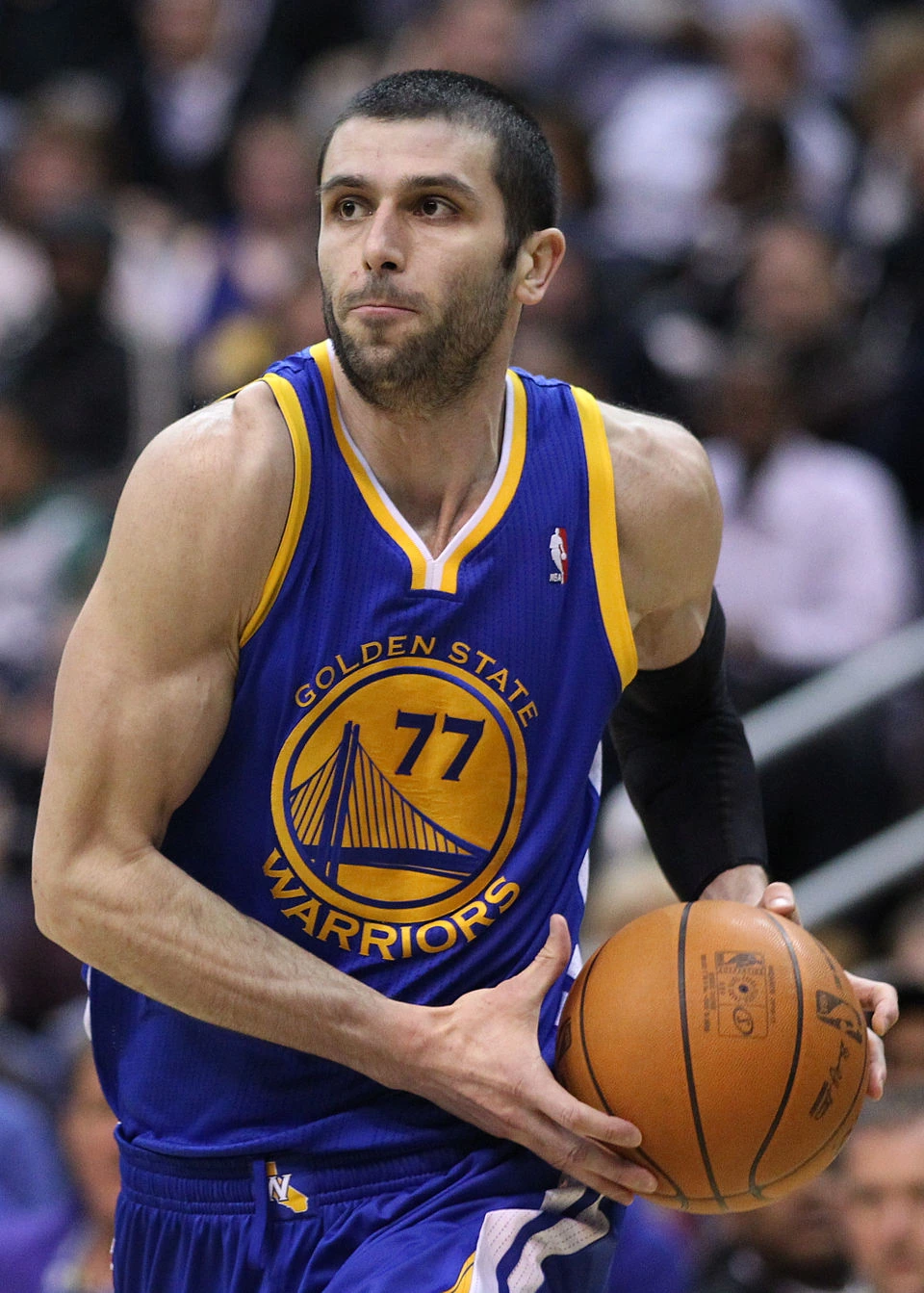
There are a few notable people named Radmanović in the Balkans, and it is worth being clear about which one this article covers. Vladimir Radmanović the basketball player was born on November 19, 1980, in Trebinje (present-day Bosnia and Herzegovina), and represents Serbia internationally. He is an NBA veteran drafted 12th overall by the Seattle SuperSonics in the 2001 Draft, with a career spanning roughly 12 seasons across teams including the Seattle SuperSonics, Los Angeles Clippers, Los Angeles Lakers, Charlotte Bobcats, Golden State Warriors, Atlanta Hawks, and Chicago Bulls. He is also an Olympian who represented Serbia in basketball.
The name to watch out for: Serbian and Bosnian media regularly reference a different 'Radmanović' in the context of investment funds, banking, and politics. A Bosnian business news article quotes a 'Radmanović' discussing stock holdings in IRB funds and Balkan investment banking matters. That is an entirely separate individual. If you are researching NBA wealth or athlete finances, Basketball-Reference (player ID radmavl01) and NBA.com (player ID 2209) confirm you are looking at the correct person.
The net worth estimate as of today
Published estimates vary quite a bit. CelebsMoney places his 2026 net worth in the $100,000 to $1 million range, while CelebrityHow puts it at $3 million. Neither figure is sourced from a verified financial disclosure. Basketball-Reference documents that Radmanović earned at least $43,101,141 playing professional basketball, and Spotrac's contract database fills in the detail: a rookie deal worth roughly $3.9 million over three years, a one-year tender near $3.17 million in 2005, and a five-year deal totaling around $30.25 million signed in 2006. Those are gross pre-tax figures. Working backward through taxes, agent fees, living costs, and reasonable investment assumptions, a net worth in the $3 million to $5 million range is a more defensible estimate than the sub-$1 million floor that some aggregator sites publish.
Keep in mind this is still an estimate, not an audited balance sheet. The number should be read as a bracket, not a precise figure. Market conditions in 2026, especially across real estate and investment portfolios, mean the actual number could sit higher or lower depending on choices he made with post-career capital.
How these estimates are actually built

Net worth is assets minus liabilities. For a retired professional athlete like Radmanović, researchers building an estimate typically start with documented career earnings from contract databases like Spotrac or Basketball-Reference, then apply deduction layers: federal and state income tax (often 45 to 50 percent of gross NBA salary when combined), agent fees (typically 3 to 4 percent), and ongoing living expenses during the playing career. What remains is the theoretical accumulated capital available for investment or saving.
From there, estimators make assumptions about what percentage of that capital was invested, what asset classes it went into (real estate, equities, business ventures), and what returns those assets generated in the years since retirement. This is where estimates diverge the most, because none of these post-career decisions are publicly documented for most athletes. Sites that skip these deduction layers and simply take a fraction of career earnings often produce inflated or deflated numbers depending on their formula.
Where the money came from during his career
NBA contracts
The dominant income source by far was his NBA salary. The publicly available contract record shows a career arc that peaked with that five-year, $30-plus million deal signed in 2006, a contract that covered his time with the Lakers and subsequent teams. ESPN reported at the time that he had blank" rel="noopener noreferrer">turned down a $42 million six-year offer from Seattle before eventually signing elsewhere, which gives useful context for understanding the negotiating leverage and market valuation he carried at his peak. The Los Angeles Times reported that Radmanović blank" rel="noopener noreferrer">rejected a reported six-year, $42-million offer and instead signed a one-year contract. His rookie contract, reported by SeattlePI as roughly $3.9 million over three years, was the starting point.
European league earnings
Radmanović played professionally in Europe both before entering the NBA and potentially after his NBA career wound down. European top-tier contracts for players of his caliber and profile are not always publicly disclosed at the same granularity as NBA contracts, but EuroLeague and top domestic league salaries for marquee international players have historically ranged from a few hundred thousand to over a million euros per season. These figures are not confirmed publicly for Radmanović specifically, so any estimate that includes European earnings is working from general market context rather than documented contract terms.
Endorsements and sponsorships
No major endorsement deals have been publicly reported for Radmanović at the level that would materially shift a net worth estimate. While NBA players at his draft position and career length often attracted regional or footwear endorsements, there is no publicly available contract or media report documenting significant endorsement income for him specifically. For estimation purposes, this is typically treated as a minor or unknown variable.
Post-career income and business interests
There is no publicly documented evidence of significant business ventures, coaching roles, or investment disclosures tied to Radmanović after his playing career. This is common among former international NBA players who retire to private lives. Absence of disclosure does not mean absence of income, but it does mean any post-career business income is unverifiable and should not be added to an estimate without a concrete source.
Assets and wealth drivers: what's known vs what isn't
| Category | What's publicly documented | What's typically unverified |
|---|---|---|
| NBA contract earnings | At least $43.1M gross (Basketball-Reference, Spotrac) | Exact after-tax, after-fee net retained |
| European league earnings | Not publicly disclosed | Estimated from market context only |
| Real estate | No public property records confirmed | Unknown holdings in Serbia, US, or elsewhere |
| Endorsements | No major deals publicly reported | Possible minor regional deals, undocumented |
| Business investments | No public filings or media reports found | Entirely unknown |
| Liabilities / debt | No public disclosure | Mortgages, personal loans entirely unknown |
For Balkan-region athletes specifically, real estate holdings in Serbia and the surrounding region are a common post-career wealth driver that rarely surfaces in English-language media or public databases. This regional blind spot is worth flagging: a player who invested even modestly in Belgrade or Montenegrin real estate during the mid-2000s real estate expansion could hold assets that would shift the estimate meaningfully upward. This is speculative without documentation, but it is a pattern worth understanding when reading any Balkan athlete's net worth estimate.
Why different sites show very different numbers

The gap between CelebsMoney's sub-$1 million estimate and CelebrityHow's $3 million figure comes down to methodology, not access to better data. Sites that publish net worth aggregates typically use one of a few approaches: a flat multiplier on career earnings, a comparison to similarly ranked athletes from the same draft class, or a scrape of older estimates adjusted for inflation. None of these approaches are wrong in spirit, but they produce different outputs depending on which assumptions are baked in.
- Currency and conversion: If a site calculates earnings in Serbian dinars or euros and then converts at an outdated exchange rate, the output shifts.
- Timeline of the estimate: A figure calculated in 2015 and not updated will not reflect a decade of investment returns or spending.
- Tax assumptions: Some sites use gross career earnings as a proxy for net worth without deducting taxes, producing inflated figures.
- Source chaining: Many aggregator sites copy from each other, meaning a single outdated estimate propagates across dozens of pages without correction.
- Career endpoint confusion: If a site miscounts Radmanović's active seasons or misses European earnings on one end, the base figure changes before any multiplier is applied.
CelebsMoney's note that the estimate is 'under review' is actually a useful transparency signal. It means the site acknowledges the figure is uncertain. Most sites that publish a precise single number without that caveat are projecting false confidence. Treat any net worth figure for a private individual without a financial disclosure as a range, not a fact.
How to verify and keep the estimate current yourself
If you want to build or update your own informed estimate, here is a practical sequence to follow:
- Start with Spotrac's Vladimir Radmanovic page for season-by-season salary data. This is the most granular public source for NBA contract earnings.
- Cross-check totals against Basketball-Reference (player ID radmavl01), which independently documents career earnings and states the $43.1 million floor figure.
- Apply a rough tax deduction of 45 to 50 percent to gross NBA earnings to approximate after-tax income during playing years. This reflects combined federal and California or other state income tax burdens during his peak earning seasons.
- Subtract estimated agent fees (3 to 4 percent of gross salary per standard NBPA agent commission rules).
- Search Serbian and regional Balkan media (B92, Politika, Nezavisne) using his name in Cyrillic (Владимир Радмановић) for any business, property, or investment mentions not covered in English-language press.
- Check if any Serbian basketball federation or EuroLeague sources reference post-NBA playing contracts with documented figures.
- Set a calendar reminder to recheck aggregator sites annually, since figures published in 2025 or early 2026 may already be outdated if his situation changed.
One honest limitation to name: without a financial disclosure, a bankruptcy filing, a property deed in a searchable registry, or a credible investigative report, you are always working with an approximation. The $3 million to $5 million range for Radmanović is reasonable and defensible based on what is documented, but it is not a verified figure. If you are specifically looking for Vladimir Stimač net worth figures, note that any credible estimate should be sourced to documented earnings and filings rather than unspecific aggregator claims. Anyone presenting a precise single number without sourcing it to an actual disclosure should be read skeptically.
For context within the broader landscape of Balkan public figures covered on this site, Radmanović's estimated wealth profile is broadly consistent with other retired professional athletes from the region who had successful but not superstar-level NBA careers. If you are specifically looking for Vladimir Đukanović net worth, apply the same approach: start with verified income sources and treat any single-number claims as unsourced until corroborated estimated wealth profile. If you are comparing figures across websites, you can also look up Vlad Coric net worth as another example of how estimates differ between sources. His situation is meaningfully different from, say, politicians or business figures whose financial interests are sometimes documented through official disclosure requirements or corporate filings. Athletes at his career level tend to fall into a wealth bracket that is comfortable but not the kind of publicly visible ultra-high-net-worth that generates extensive documentation.
FAQ
Why do some websites estimate Vladimir Radmanović’s net worth under $1 million while others show it around $3 million or more?
If you see a very low figure (for example, below $1 million), it usually means the site is applying an overly aggressive haircut for taxes and expenses, or ignoring investment growth after retirement and using a conservative “savings fraction” that may not fit his actual situation. The range in the article is built to avoid that kind of one-size-fits-all multiplier.
How much do post-NBA income assumptions affect Vladimir Radmanović’s net worth estimate?
Net worth estimates can swing a lot depending on whether the model assumes he kept earning income after the NBA (for example, European contracts, coaching, consulting, or business income) versus assuming only retirement investment returns. The article notes post-career business disclosure is limited, so most calculations omit those components, which lowers confidence and can understate totals if he earned elsewhere.
What’s the biggest mistake people make when estimating Vladimir Radmanović’s net worth from career earnings?
A common mistake is treating gross NBA career earnings as if they were his net worth starting point. The model needs to deduct income taxes (often a large share of salary), agent fees, and realistic living costs during active years. Without those layers, you can end up with a net worth number that is not financially consistent.
If his NBA salary is known, why is his net worth still uncertain?
Yes. Even if career earnings were well documented, the uncertainty comes from how much was invested, what assets were used (for example, real estate vs. equities), and what returns were actually achieved since retirement. Two athletes with identical gross salaries can end up far apart in net worth if one invested more aggressively or avoided high-risk positions.
How can I build my own range-based net worth estimate instead of relying on a single website number?
The article’s bracket is designed to reflect that uncertainty, but you can update your own estimate by pulling the contract totals and then testing “best case” and “worst case” return scenarios on the portion you assume was saved. For example, if you assume a higher effective tax drag or lower investment return, your range should shift downward accordingly.
Can I include Radmanović’s Europe earnings in his net worth calculation, and when is it appropriate?
For European earnings, you should only include them if you can tie them to documented contract terms or credible reporting for the specific seasons. Since the article says those amounts are not confirmed for him with NBA-level detail, adding generic “market context” amounts can inflate a total quickly.
If I find an endorsement claim for Radmanović, should I automatically add it to the net worth?
Endorsements can matter, but the article states there is no major endorsement income publicly documented at a level that would materially change the estimate. If you encounter a claim about endorsements, treat it as unverifiable unless it is tied to specific campaigns, contract amounts, or credible reporting with dates.
Could Vladimir Radmanović’s net worth be lower than the estimate due to liabilities?
It’s possible for net worth to be lower than expected if leverage exists, for example, mortgages, business debt, or settlement obligations. Since the article frames the figure as assets minus liabilities and notes a lack of audited disclosure, you cannot assume there are no liabilities, only that the estimate is consistent with typical athlete patterns.
How do I make sure I’m not mixing him up with another person named Radmanović?
To avoid confusing him with other people named Radmanović in the Balkans, rely on the NBA player identifiers and the birth details tied to the basketball career. If a source discusses investment funds, banking, or politics, verify whether it is actually referencing the athlete before treating it as relevant to “vladimir radmanovic net worth.”
What should I look for when comparing different Radmanović net worth estimates across websites?
If you are comparing across sites, prefer those that disclose methodology or explicitly flag uncertainty (like “under review”) and treat any single-number claim as provisional. In practice, the most reliable approach is to compare ranges and look for common overlap, not the extreme high or low output from one model.